





![Movie poster for '[Rec]" (2007).](https://www.lionnewspaper.com/wp-content/uploads/2023/04/rec-640x900.jpg)


Every spring, as graduation approaches, seniors begin preparing for one of the most visible milestones of their lives: commencement. Caps, gowns, speeches, and diplomas dominate the conversation. Tucked just before that major event is something quieter, more personal, and, for many students, even more meaningful: Baccalaureate.
Unlike the high-energy formality of graduation, Baccalaureate offers something different: space to pause. Director of baccalaureate, Laura Moore, who is organizing this year’s ceremony, emphasizes that the event is often misunderstood.
“To start with, Baccalaureate isn’t any kind of award,” Moore said. “It’s a reflection ceremony for graduating seniors as they look back on their time in high school and ahead to their new journeys of all kinds.”
Rather than celebrating achievement in the traditional sense, the evening centers on expression—what students have experienced, learned, and become. That focus on reflection shapes everything about the event. Moore describes it as a moment when seniors can openly share their thoughts and emotions during a major life transition. She notes that students might talk about what they’ve learned, what they’re excited for, or what their time at LT has meant to them.
“It’s a time for seniors to share any thoughts and feelings they have about their high school journey with their peers and their families,” Moore said.
It’s less about recognition and more about connection. That distinction matters. Baccalaureate is not meant to replace or compete with commencement—it exists alongside it, serving a completely different purpose.
“The ceremony is not a commencement,” Moore said. “There are no awards or diplomas distributed. We don’t read a list of graduates.”
Nothing about the event changes a student’s official status, she added. Instead, it simply creates an opportunity for students to speak honestly, creatively, and sometimes vulnerably in front of their community. The ways students choose to express themselves are as varied as the students themselves. The ceremony isn’t limited to speeches.
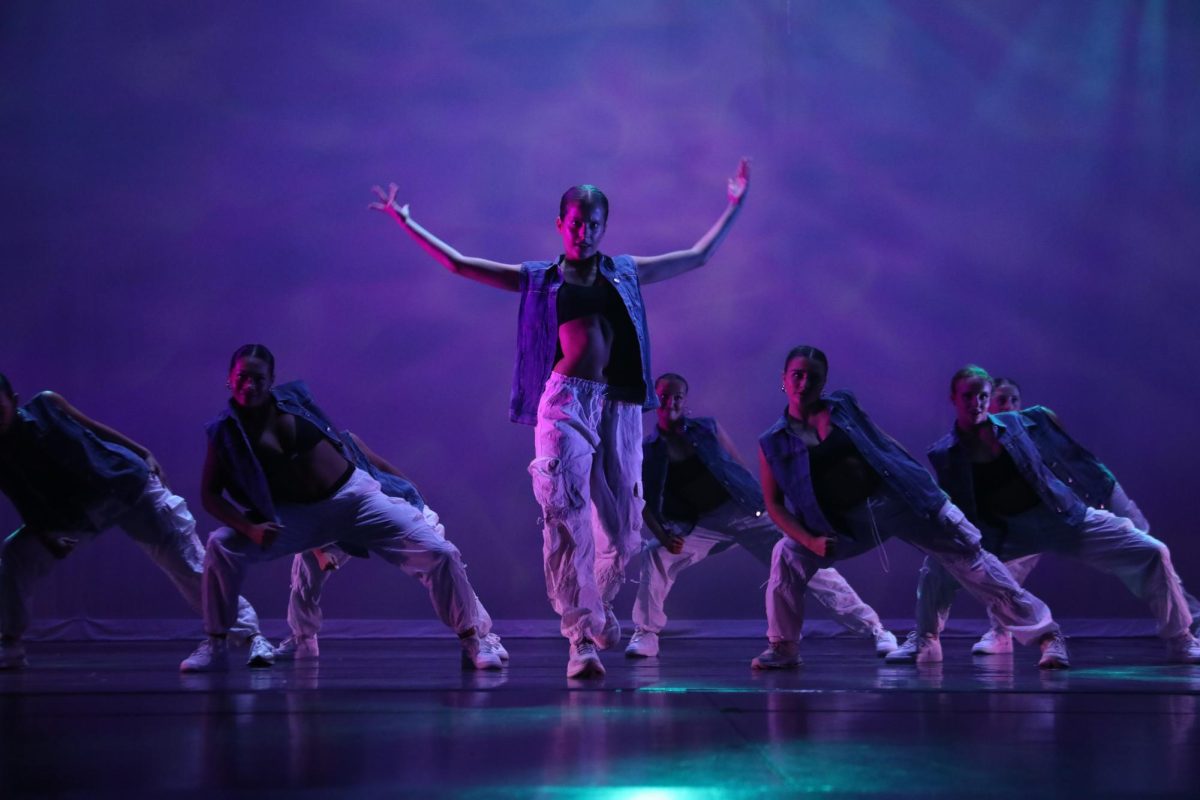
“We welcome speeches, poetry, music, dance, or other types of presentations students might incorporate into the ceremony,” Moore said. “Some students may perform original songs, others might read personal essays, and some may share artwork or choreography. The flexibility is intentional—it allows each participant to communicate in the way that feels most authentic to them.”
Participation, importantly, is entirely optional. Moore stresses that students who feel drawn to the event are encouraged to get involved, but there is no expectation.
“Baccalaureate is open to all seniors who have something meaningful they want to share,” Moore said.
Interested students can reach out to Moore or co-organizer and music teacher John Musick with an idea, and from there, the process becomes collaborative. The goal isn’t perfection—it’s sincerity.
Despite its name, Baccalaureate is not a religious ceremony, though it may feel familiar to some attendees. Moore explained that while the structure might resemble certain traditional services, the event itself is fully secular. Students are welcome to speak from their own personal beliefs or experiences, including spiritual ones, but the ceremony as a whole does not promote any particular religious perspective. This openness ensures that every student’s voice can be included and respected.
“Basically, it’s a spiritual, reflective ceremony for seniors to look back on their time in high school with gratitude and celebrate all they’ve accomplished,” Lillian Flynn ‘26 said. “Many students do this through art or performance; I personally am looking forward to singing and reading my poetry for the audience.”
The result is an event that often surprises people. Without the pressure of awards or formal recognition, students tend to share more genuine, thoughtful reflections. It becomes a space where humor, gratitude, uncertainty, and hope can all coexist—something not always possible in more structured ceremonies.
“While many events for seniors involve celebration, Baccalaureate allows for quiet reflection, which definitely makes it unique,” Flynn said. “Because it allows students to share their journey at LT on a more personal level, it not only invites you to think about your own experience, but also consider the experiences of others who may be different from you, which is really powerful.”
This year, Baccalaureate took place on Friday, May 15 at 6 p.m. in the Reber Center. The ceremony typically lasts between 75 and 90 minutes, and unlike many school events, it was completely free and open to the public. No tickets or registration were required, and families were not just allowed but encouraged to attend.
Flynn explained that she spent significant time preparing for Baccalaureate, gathering student poetry and speeches while also contributing a poem of her own.
“I focused a lot on the writing for Baccalaureate; I collected student poetry and speeches, and I even wrote a poem myself,” Flynn said.
She added that the event will also include a personal element, as she plans to share the stage with a family member.
“I will also be doing a speech with my dad,” she said.
Flynn noted that this isn’t her first time blending creative expression with performance, referencing a previous choir event that influenced her approach.
“I actually did a similar thing for our choir concert, Fanfares and Carols, which kind of paved the way for how I approached Baccalaureate,” she said.
She emphasized how meaningful creative writing is to her and her desire to extend that opportunity to others.
“The act of creative writing is very personal to me and is a way I like to express myself, so I wanted to give other seniors a chance to do the same,” she said.
In addition to writing and speaking, Flynn highlighted her continued involvement in music.
“I will also be performing a piece with the varsity choir, as singing is a big part of my life as well,” she said.
Flynn acknowledged that the preparation process came with its own set of challenges, particularly with writing.
“Well, I had to do a lot of writing, which was a bit of a challenge on its own,” Flynn said.
She described moments when she struggled with time management and creative inspiration.
“Sometimes, I would run out of time or inspiration, so I’d have to really think about what I wanted to convey at Baccalaureate, to the audience and to my fellow seniors.”
Despite these difficulties, she found the experience ultimately rewarding and reflective.
“This actually helped me, since it allowed me to reflect upon my experiences at LT and in high school, and put together something that I’m really excited to share,” she said.
Looking ahead, Flynn believes the event will provide a meaningful sense of closure.
“It’ll definitely help me find some closure after spending four years at LT and gain some insight about my high school journey, which will help me move forward into college with confidence,” Flynn said.
She also sees it as a valuable opportunity to share her passions on a larger stage.
“Also, it’s a great opportunity to connect with my passion and apply it to a larger event and audience, which is definitely a good experience to have,” she said.
In the midst of a season filled with deadlines, celebrations, and goodbyes, Baccalaureate offers something rare: a chance to slow down and listen. It’s where students step forward not as graduates receiving recognition, but as individuals telling their stories. And in those stories—honest, creative, and deeply personal—listeners often find something of their own.